

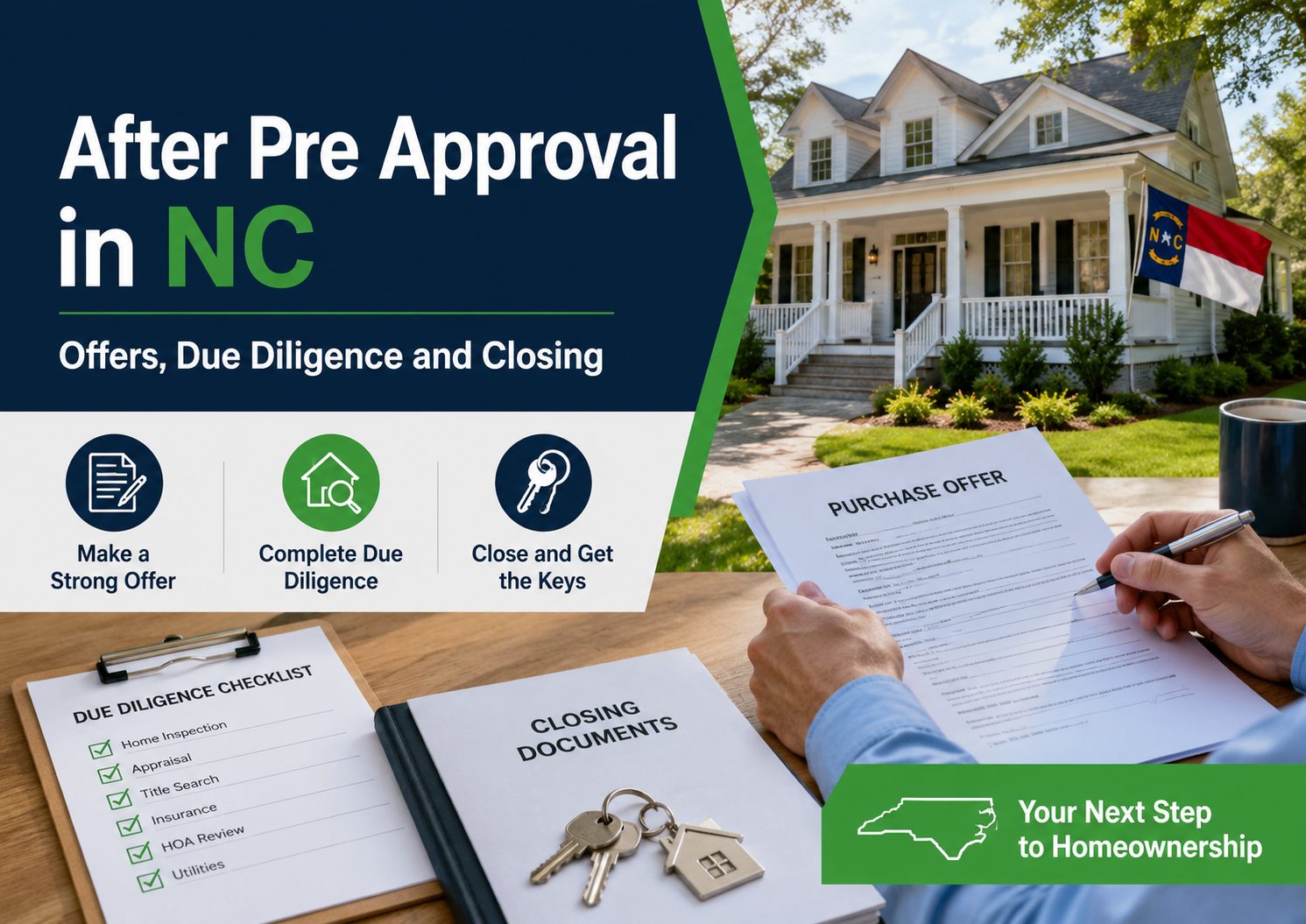
You have your pre-approval letter. Now what? Here's the complete roadmap from your first showing to the moment you get your keys, with everything you need to know about NC's unique buying process.
📚Western NC First Time Buyer Series
- Part 1 NC Down Payment Assistance Programs
- Part 2 USDA Loans in Western NC: The 0% Down Option
- Part 3 What Credit Score Do You Need to Buy in NC?
- Part 4 How to Get Pre Approved for a Home Loan in Western NC
- Part 5 After Pre Approval: Offers, Due Diligence and Closing in NC
Your Complete Roadmap: Pre-Approval to Keys
Here's the full journey at a glance. Each stage is covered in detail below.
Browse listings, tour properties with your agent, and identify homes that meet your needs, budget, and USDA eligibility, if applicable.
Your agent submits the NC Offer to Purchase. You negotiate purchase price, due diligence fee, earnest money, closing date, and contingencies.
Seller accepts. Due diligence fee and earnest money are delivered. Your due diligence period clock starts. You are officially under contract.
Order and complete the home inspection, well and septic inspection, if applicable, and any specialist inspections. Review all findings. Negotiate repairs or price reductions if needed. You can still walk away, losing only your DD fee.
Your lender schedules an appraisal to confirm the home’s market value. For USDA loans, the appraiser also checks property condition standards. Results typically arrive within 7 to 14 days.
Your lender’s underwriter reviews everything, your financials, the appraisal, and the title search. They may issue conditions that require additional documents. Respond quickly to keep your timeline on track.
Lender issues the “Clear to Close.” You receive your Closing Disclosure, CD, at least 3 business days before closing. Review every line carefully. Wire your closing funds.
You meet at a NC real estate attorney’s office. Sign all documents, confirm funds are received, deed is recorded, and keys are yours. Welcome home.
1.Searching for the Right Home in Western NC
- Use the live property search at Ginny Real Estate, updated in real time, not delayed like Zillow or Realtor.com
- Set up automated alerts so you’re notified the moment a new listing hits your criteria
- If targeting a USDA loan, verify each property address at the USDA eligibility map before touring
- For Clyde, Canton, and river adjacent properties, always check FEMA flood zone status early, see our Clyde First Time Buyer Guide for details
- Be ready to tour and decide quickly, waiting until the weekend on a Thursday listing often means someone else got there first
In Western NC, the best homes at the best prices don’t sit. I’ve had buyers miss homes they loved because they wanted to sleep on it for a few days. That doesn’t mean be reckless, it means be prepared. Know your must haves before you start, so when the right home appears, you’re ready to move with confidence.

2.Making an Offer in North Carolina
When you find the home you want, your agent will prepare the NC Offer to Purchase and Contract, the standard form used statewide. Understanding the components of your offer helps you make one that's competitive without overexposing yourself.
In a competitive situation with multiple offers, a higher due diligence fee is often more persuasive to a seller than a higher purchase price, because the DD fee is theirs to keep regardless. Your agent can help you structure an offer that’s competitive without unnecessarily inflating your price.
3.North Carolina's Due Diligence Period: What Makes It Unique
🔑How NC Due Diligence Works
Once your offer is accepted, you enter the due diligence period, a negotiated window, typically 14 to 30 days, during which you can investigate the property and terminate the contract for any reason at all. No questions asked.
You pay a due diligence fee at the start, this is non refundable and goes directly to the seller. You also deposit earnest money into escrow. Here’s what happens to each if you walk away:
- Due diligence fee, LOST, goes to seller
- Earnest money, RETURNED to you
- Inspection costs, LOST, you paid them
- Appraisal fee, LOST, if already ordered
- Due diligence fee, already gone, paid at contract
- Earnest money, AT RISK, seller may keep it
- Exceptions: financing or appraisal contingencies, if included
“The due diligence period is your most powerful tool as a buyer. Use every single day of it. Get your inspections done in the first week so you have time to negotiate, get specialist quotes, and make a fully informed decision before the clock runs out.” Ginny Mosteller
What to accomplish during your due diligence period:
- General home inspection, schedule within the first 2 to 3 days of going under contract. Do not wait.
- Well inspection and water test, required for properties on private wells. Tests for bacteria, nitrates, and other contaminants. Common in rural Haywood County.
- Septic inspection, required for properties on private septic systems. Can reveal costly issues. Common outside Clyde and Canton town limits.
- Radon test, Western NC mountains have elevated radon levels compared to state averages. A radon test during DD is strongly recommended.
- Chimney and wood stove inspection, many Western NC mountain homes have fireplaces and wood stoves. Creosote buildup and structural issues are common in older systems.
- Pest WDI inspection, required by most lenders. Checks for termites, wood destroying insects, and fungal damage, all common in NC mountain homes.
- Structural or foundation inspection, if the general inspector flags concerns, bring in a structural engineer. Mountain homes on slopes or with crawl spaces warrant extra scrutiny.
- Flood zone verification, confirm FEMA zone designation and get flood insurance quotes if applicable. Critical for Clyde and river adjacent properties.
- Review HOA documents, if applicable, review rules, fees, financials, and restrictions during DD.
- Confirm USDA property eligibility, if using USDA, your lender will confirm during this phase. Any USDA property condition requirements flagged in the appraisal will surface here.
In Western NC’s older mountain housing stock, I routinely see crawl space moisture issues, aging HVAC systems, outdated electrical panels, Federal Pacific and Zinsco are red flags, and deferred roof maintenance. These are not necessarily deal breakers, but they are negotiating points. The inspection gives you the information you need to either ask for repairs, negotiate a price reduction, or walk away with only your DD fee at risk.
4.The Home Appraisal: What to Expect
While you're doing your due diligence, your lender will order an independent appraisal. The appraiser's job is to confirm that the home is worth at least what you're paying, protecting both you and the lender from overpaying.
- Appraisals in Western NC typically cost $500 to $750 and are paid by the buyer upfront
- Scheduling can take 5 to 14 days in rural Haywood County, fewer appraisers serve mountain markets
- USDA appraisals evaluate both market value and property condition against USDA minimum standards
- If the home appraises below the purchase price, you have options: renegotiate the price, make up the difference in cash, or walk away, if you have an appraisal contingency
- If the appraisal meets or exceeds the purchase price, you move straight into underwriting
Appraisal gaps, where the appraised value comes in below the offer price, are more common in heated markets. In Western NC, where inventory is low and prices have risen sharply, this does happen. Before making an above asking offer, your agent should walk you through the risk and whether you’re prepared to cover a potential gap or renegotiate.
5.Underwriting: The Final Stretch
Once the appraisal is complete and your due diligence period has ended, your loan file moves into full underwriting. The underwriter reviews everything, including your income documents, credit, appraisal, and title search, and makes the final call on your loan approval.
- Underwriting typically takes 5 to 15 business days depending on lender volume and loan complexity
- You may receive a conditional approval, meaning approval is granted pending specific additional documents. Respond to these requests same day if possible.
- Common underwriting conditions include: updated pay stubs, a letter of explanation for a large deposit, updated bank statements, or HOA documentation
- Do NOT make any major financial changes during underwriting, no new debt, no job changes, no large purchases, review our pre approval guide for the full list
- USDA loans have an additional step: after lender underwriting, the file goes to the USDA Rural Development office for a final guarantee review. Allow an extra 3 to 10 business days for this step.
6.Understanding Your Closing Costs in NC
Closing costs in North Carolina typically run 2–5% of the loan amount. On a $350,000 purchase, that's $7,000–$17,500. Here's a realistic breakdown of what you'll see on your Closing Disclosure:
| Cost Item | Typical Range | Notes |
|---|---|---|
| Lender origination fee | 0 to 1% of loan | Varies by lender, some charge points for lower rates |
| Appraisal fee | $500 to $750 | Usually paid upfront before closing |
| Credit report fee | $25 to $50 | Lender charge for pulling your credit |
| Title search | $200 to $400 | Attorney confirms clean ownership history |
| Title insurance, owner’s | $500 to $1,200 | One time premium, protects your ownership rights |
| NC real estate attorney fee | $600 to $1,200 | Required in NC, attorney must conduct closing |
| Recording fees | $50 to $150 | County register of deeds recording charge |
| Prepaid homeowner’s insurance | $800 to $2,000+ | First year’s premium due at closing |
| Prepaid mortgage interest | Varies | Interest from closing date to end of first month |
| Escrow setup, taxes plus insurance | 2 to 3 months reserves | Initial escrow cushion required by lender |
| USDA guarantee fee, if applicable | 1% of loan, financed | Typically rolled into loan, not paid at closing |
| Flood insurance, if required | Varies widely | First year’s premium due at closing if in flood zone |
| Estimated Total | $7,000 to $17,500+ | On a $350,000 purchase, 2 to 5% |
NC down payment assistance funds can be used to cover closing costs, especially powerful when combined with a USDA loan that already covers your down payment. See our full breakdown in Part 1 of this series. Use the closing cost calculator at Ginny Real Estate to model your specific scenario.
7.Closing Day in North Carolina: What to Expect
Closing day in NC is conducted at a licensed real estate attorney's office. This is a legal requirement unique to North Carolina and a handful of other attorney-closing states. Here's what to expect:
- Receive your Closing Disclosure, CD, 3 business days before closing, review every line. Compare it to your Loan Estimate. Ask your lender to explain anything that looks different.
- Final walkthrough, typically done 24 to 48 hours before closing. Confirm the home is in the agreed condition, any negotiated repairs were completed, and no new damage occurred.
- Wire your closing funds, send the exact amount shown on your CD via wire transfer to the attorney’s escrow account. Beware of wire fraud, always verify wire instructions by calling the attorney’s office directly using a number you find independently, never from an email.
- Bring to closing: Government issued photo ID, cashier’s check as backup, some attorneys prefer this, and any outstanding documents your lender requested
- At the attorney’s office: You’ll sign the mortgage note, deed of trust, closing disclosure, and multiple disclosure and compliance documents, typically 40 to 60 pages total
- Funding and recording: Once all documents are signed and funds are confirmed, the deed is recorded with the Haywood County Register of Deeds. At that moment, you are the legal owner.
- Keys: Handed over after recording is confirmed, usually same day, sometimes later in the afternoon depending on county recording speed
Wire fraud targeting real estate transactions has increased significantly. Criminals intercept closing communications and send fake wire instructions. The rule is absolute: call the closing attorney’s office directly to verbally confirm wire instructions before sending any funds. Use a phone number you look up independently, never trust a number in an email. I remind every buyer I work with of this before every closing.

“Closing day is one of the most emotional moments I get to be part of. Watching a first time buyer sign those final documents, knowing everything they did to get there, never gets old. That’s why I do this.” Ginny Mosteller
Frequently Asked Questions
What is the due diligence period in North Carolina?
It’s a negotiated window, typically 14 to 30 days, during which a buyer can investigate the property and back out for any reason. The buyer pays a non refundable due diligence fee to the seller upfront. If the buyer terminates during this period, they lose the DD fee but get their earnest money back. After the DD period ends, the earnest money becomes at risk.
How much is a due diligence fee in NC?
Due diligence fees in NC are negotiable and vary by market. In Haywood County and Western NC, they typically range from $500 to $5,000 or more in competitive situations. The DD fee is non refundable, it goes directly to the seller at the time of contract, regardless of outcome.
How long does it take to close on a home in NC?
Closing typically takes 30 to 45 days from accepted offer with conventional or FHA financing. USDA loans require 45 to 60 days due to the additional USDA Rural Development review step. NC Home Advantage Mortgage buyers should also plan for 45 to 60 days. Always communicate your loan type to the seller so timeline expectations are set correctly from day one.
What are closing costs in NC for a first time buyer?
Closing costs in North Carolina typically range from 2 to 5% of the loan amount, approximately $7,000 to $17,500 on a $350,000 purchase. Major items include lender fees, appraisal, title insurance, NC attorney closing fee, required by state law, prepaid insurance, and escrow reserves. NC DPA programs can be used to offset these costs.
Do I need an attorney to close on a home in NC?
Yes. North Carolina is an attorney closing state. A licensed NC real estate attorney must conduct the closing, perform the title search, and handle the disbursement of funds. Attorney fees typically run $600 to $1,200 and are included in your closing cost estimate.
What happens if the home doesn’t appraise at the purchase price?
If the appraisal comes in below the purchase price, you have three options: negotiate with the seller to lower the price to the appraised value, pay the difference out of pocket, the appraisal gap, or terminate the contract. The right path depends on how much you want the home, your financial flexibility, and current market conditions. Your agent will guide you through this negotiation.
Ready to Talk Real Estate?
Have questions about what happens after you get pre approved for a home loan in Western NC? Reach out anytime. I would be happy to help you understand the next steps, from touring homes and making a strong offer to navigating North Carolina’s due diligence period, inspections, appraisal, underwriting, closing costs, and closing day. Whether you are buying in Clyde, Waynesville, Haywood County, or another part of Western NC, I can help you move from pre approval to keys with a clearer plan and more confidence.


© 2026 MoxiWorks
© Better Homes and Gardens Real Estate 2023 – 2026. All rights reserved. Better Homes and Gardens®, BHGRE® and the Better Homes and Gardens Real Estate Logo are registered service marks owned by Meredith Operations Corporation and licensed to Better Homes and Gardens Real Estate LLC. Franchisee Legal Entity Name (not the dba) fully supports the principles of the Fair Housing Act and the Equal Opportunity Act. Each franchise is independently owned and operated. Any services or products provided by independently owned and operated franchisees are not provided by, affiliated with, or related to Better Homes and Gardens Real Estate LLC nor any of its affiliated companies.
