

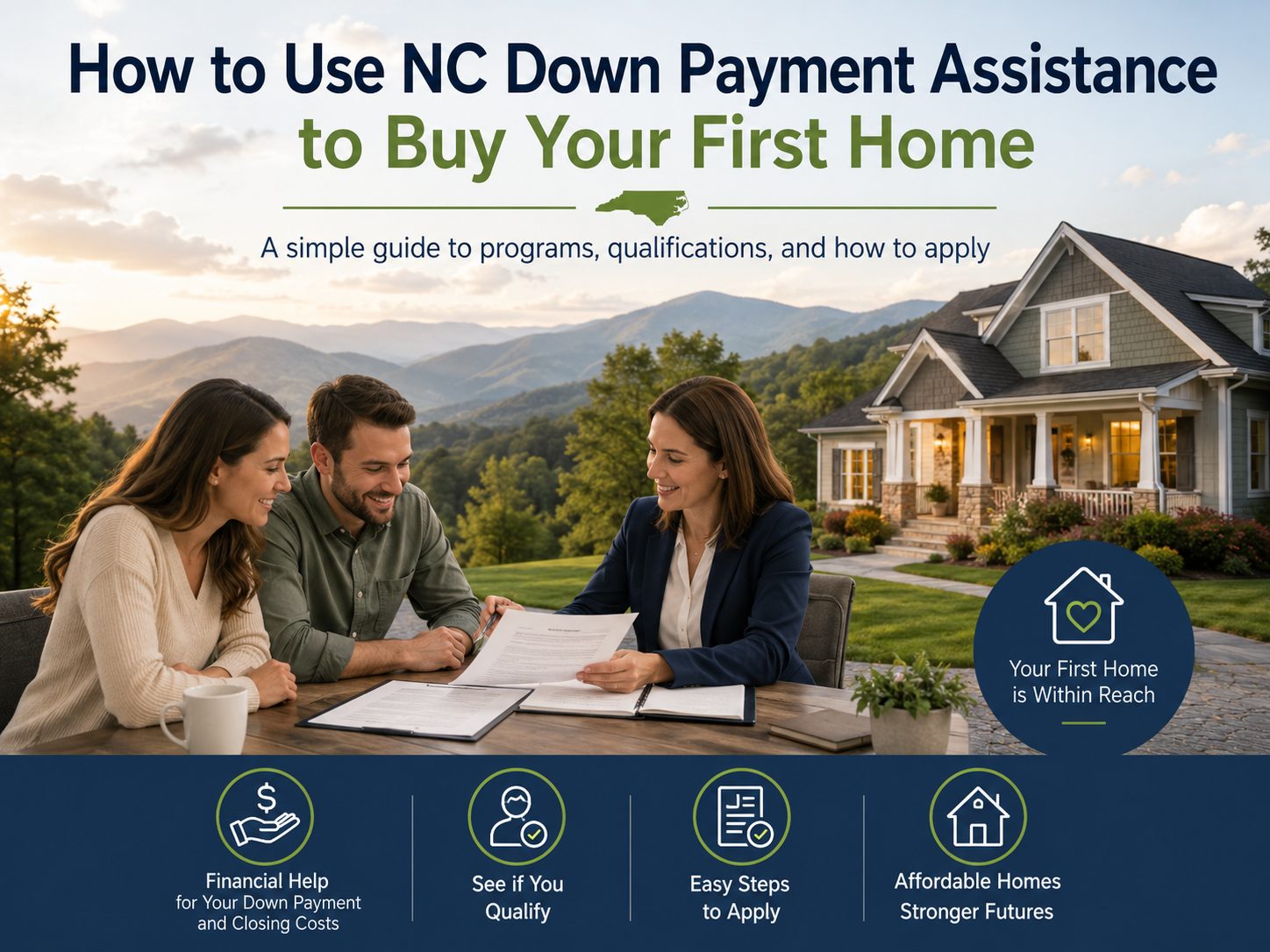
One of the biggest myths in real estate is that you need 20% down to buy a home. In North Carolina, that couldn't be further from the truth. The state's Housing Finance Agency (NCHFA) administers some of the most generous first-time homebuyer programs in the country, including up to $15,000 in forgivable down payment assistance and up to $50,000 for qualifying low-income buyers. Most people have never heard of these programs. This guide changes that.
Advantage DPA
Assistance
NC Home Advantage
in 2024
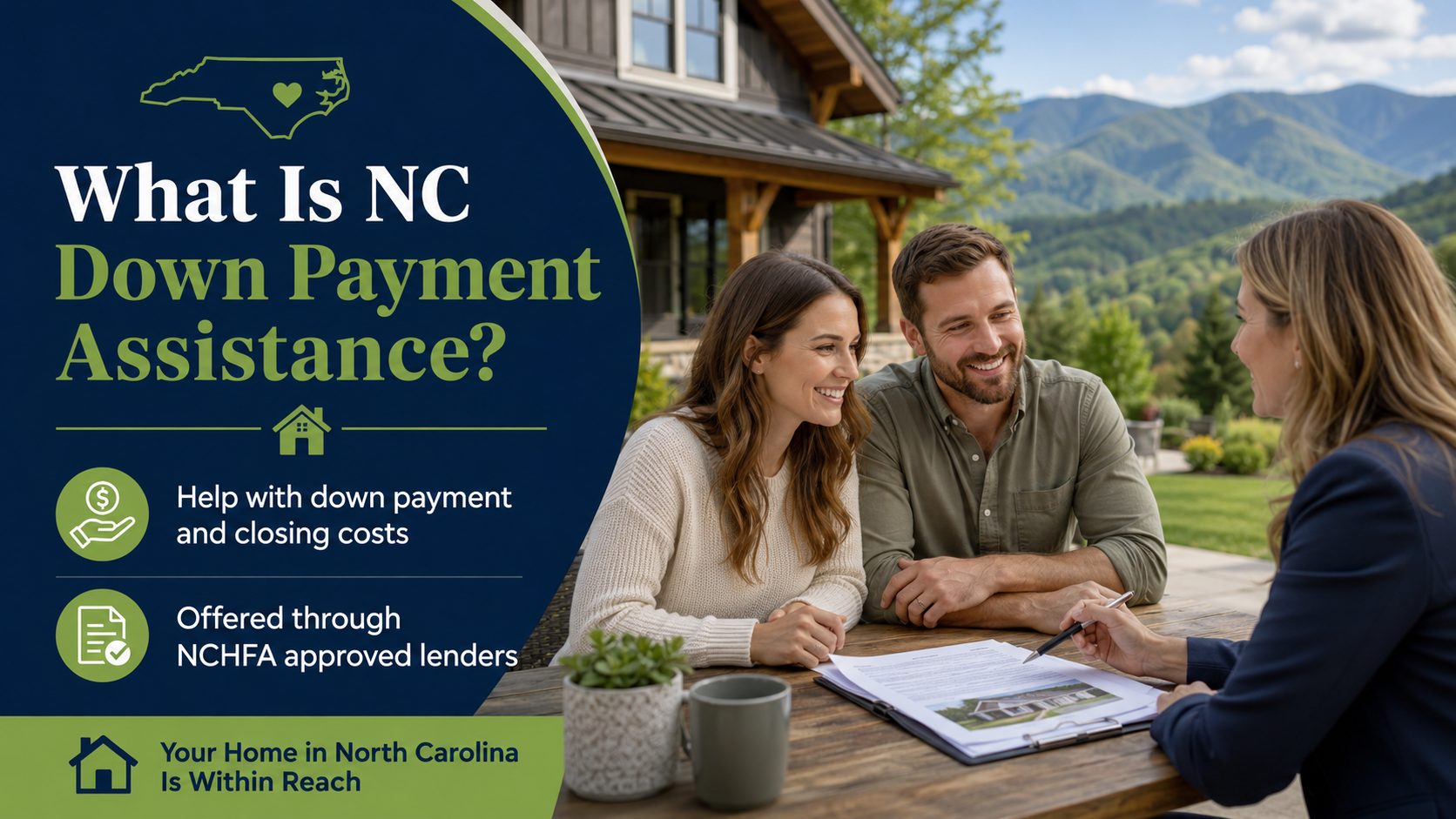
Down payment assistance, DPA, refers to grants, forgivable loans, or deferred-payment second mortgages that help homebuyers cover the upfront costs of purchasing a home, primarily the down payment and closing costs. In North Carolina, most DPA programs are administered through the North Carolina Housing Finance Agency, NCHFA, a self-supporting state public agency created specifically to expand access to affordable homeownership.
The NCHFA doesn't lend directly to buyers. Instead, it works through a statewide network of approved participating lenders, mortgage companies and banks trained to offer these special programs. Your REALTOR® can help you connect with the right lender for your situation.
In 2024 alone, the NCHFA helped 5,880 North Carolinians purchase affordable homes and generated $22.3 million in state and local tax revenue from investments in newly constructed affordable housing. These are not obscure programs, they are actively funded and widely available.
The 4 Main NC Down Payment Assistance Programs in 2025
Here is a clear breakdown of the primary programs available to first-time buyers in North Carolina right now. Each serves a slightly different buyer profile, understanding which fits you is the key first step.
NC Home Advantage Mortgage™
A fixed rate mortgage for FHA, VA, USDA, or conventional buyers with down payment assistance of up to 3% of the loan amount built right in. Available to first time and move up buyers. Income limit is $152,000. Sales price limit is $495,000. Credit score is 640 or higher.
NC 1st Home Advantage Down Payment
A $15,000 zero interest, deferred second mortgage for first time buyers and military veterans. Forgiven at 20% per year from years 11 to 15. Must be used with the NC Home Advantage Mortgage™. Credit score is 640 or higher. Income limits vary by county and household size.
Community Partners Loan Pool (CPLP)
The most generous program, up to 25% of the sales price or $50,000 for buyers earning below 80% of the area median income. Zero interest deferred loan with no monthly payments. Must work through a CPLP nonprofit member. Requires homebuyer education and in person counseling.
NC Home Advantage Tax Credit (MCC)
A Mortgage Credit Certificate that lets first time buyers and veterans claim 30 to 50% of annual mortgage interest as a federal tax credit, up to $2,000 per year for the life of the loan. This program officially ended in June 2025, so confirm current availability with your lender.
Programs can be combined strategically. For example, pairing the NC 1st Home Advantage Down Payment ($15,000) with the NC Home Advantage Mortgage (3% DPA) gives you both a significant upfront cash boost and a competitive interest rate, all through a single participating lender.
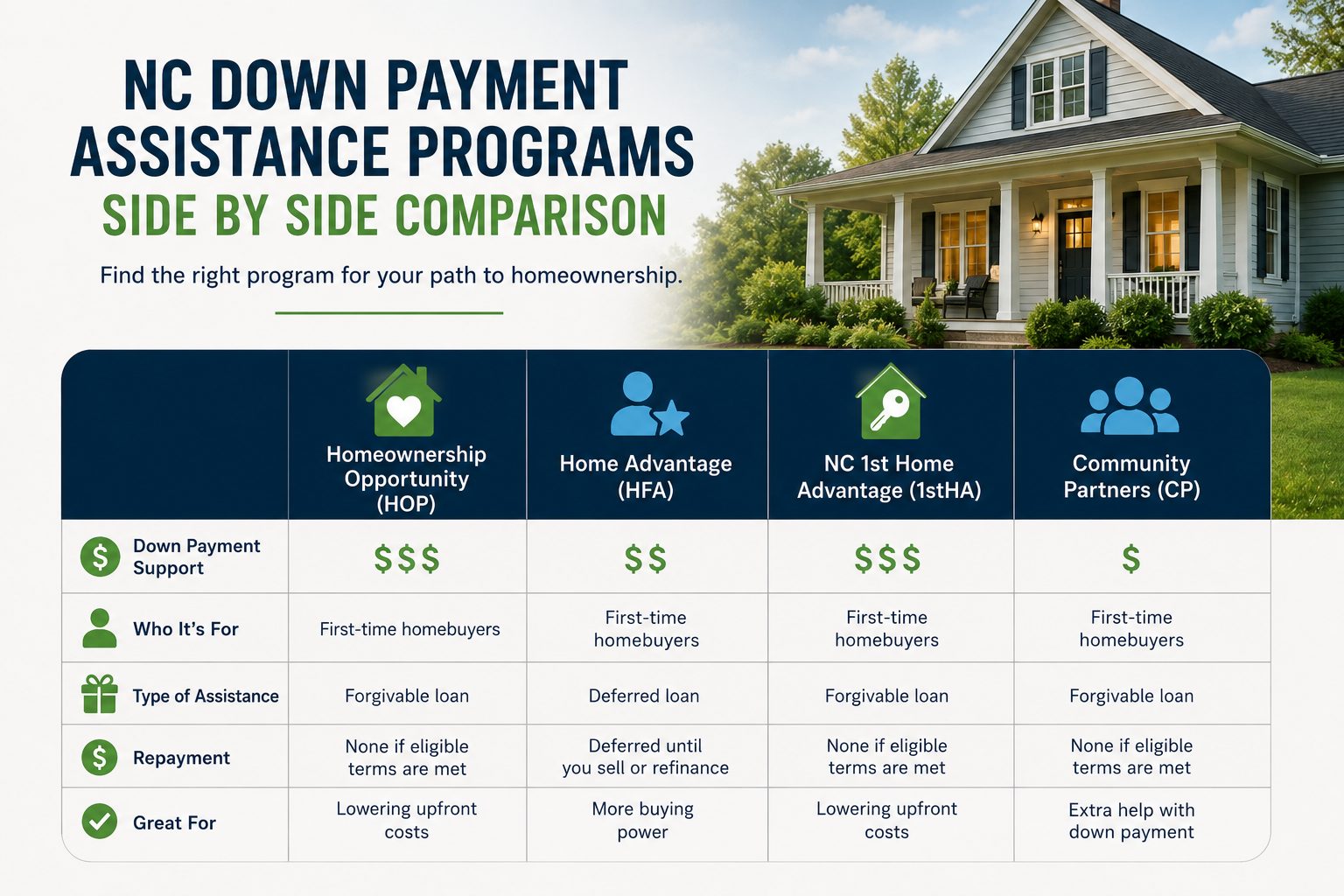
Side-by-Side Program Comparison
Use this table to quickly see which program or combination makes the most sense for your situation:
| Program | Max Assistance |
Who Qualifies | Income Limit | Repayment |
|---|---|---|---|---|
| NC Home Advantage Mortgage™ |
3% of loan | First time and move up buyers |
$152,000 | Forgiven after 15 yrs if you stay |
| NC 1st Home Advantage DPA |
$15,000 | First time buyers and veterans |
Varies by county |
Forgiven at 20%/yr, yrs 11 to 15 |
| CPLP | $50,000, 25% of price |
Buyers below 80% AMI |
Below 80% area median income |
Deferred, due at sale or end of term |
| NC Home Advantage Tax Credit |
$2,000/yr tax credit |
First time buyers and veterans |
Varies by county |
Ongoing annual tax savings, ended June 2025, verify |
Do You Qualify? Key Eligibility Requirements
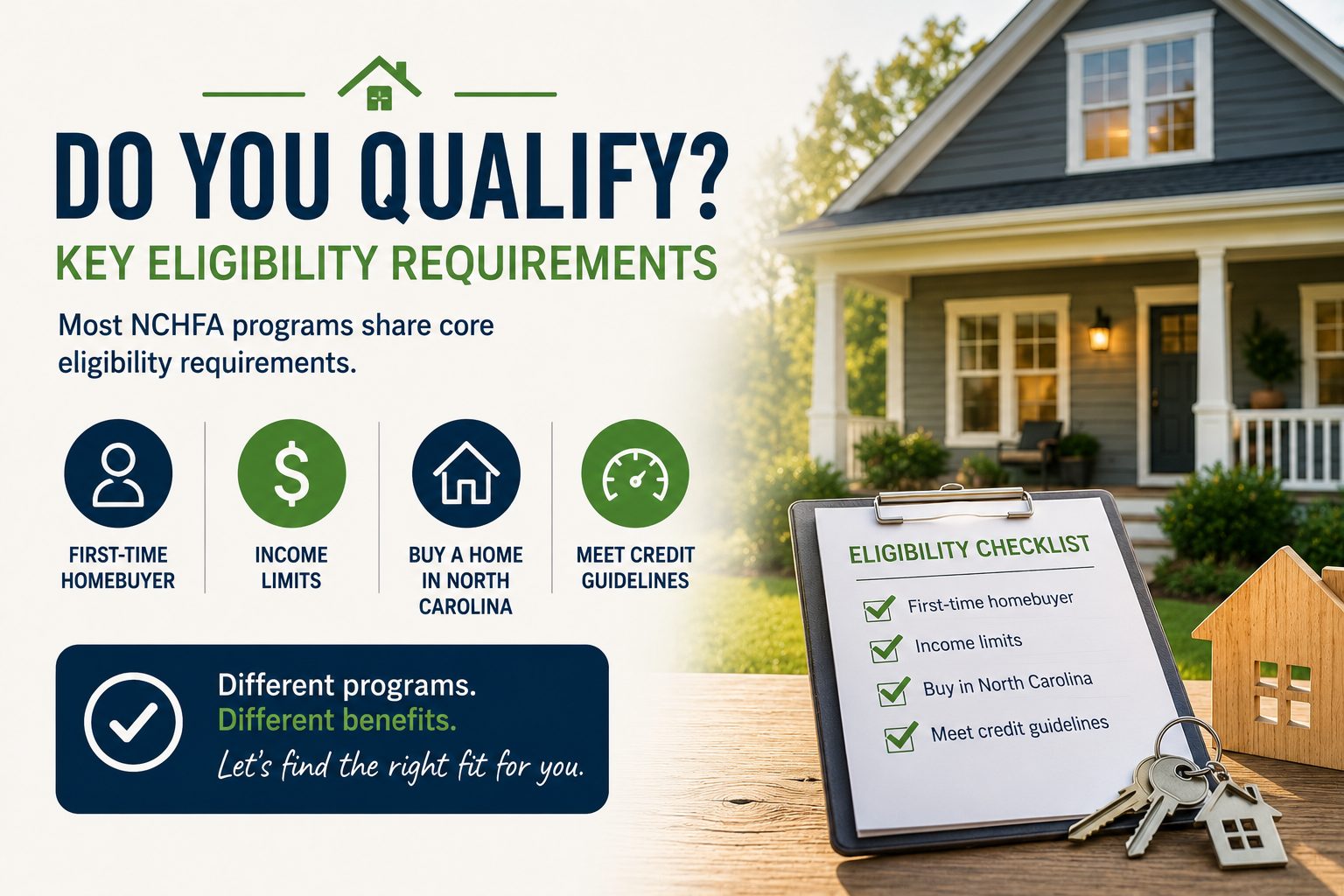
Most NCHFA programs share a core set of eligibility requirements with some variations by program. Here's what you'll need to qualify for the most popular options:
For the NC Home Advantage Mortgage™:
Additional requirements for NC 1st Home Advantage Down Payment:
Additional requirements for CPLP:
"The #1 mistake I see buyers make with NC assistance programs is finding out about them too late, after they are already under contract. These programs require preparation. Start the conversation before you start house hunting." — Ginny
How to Apply: Step-by-Step
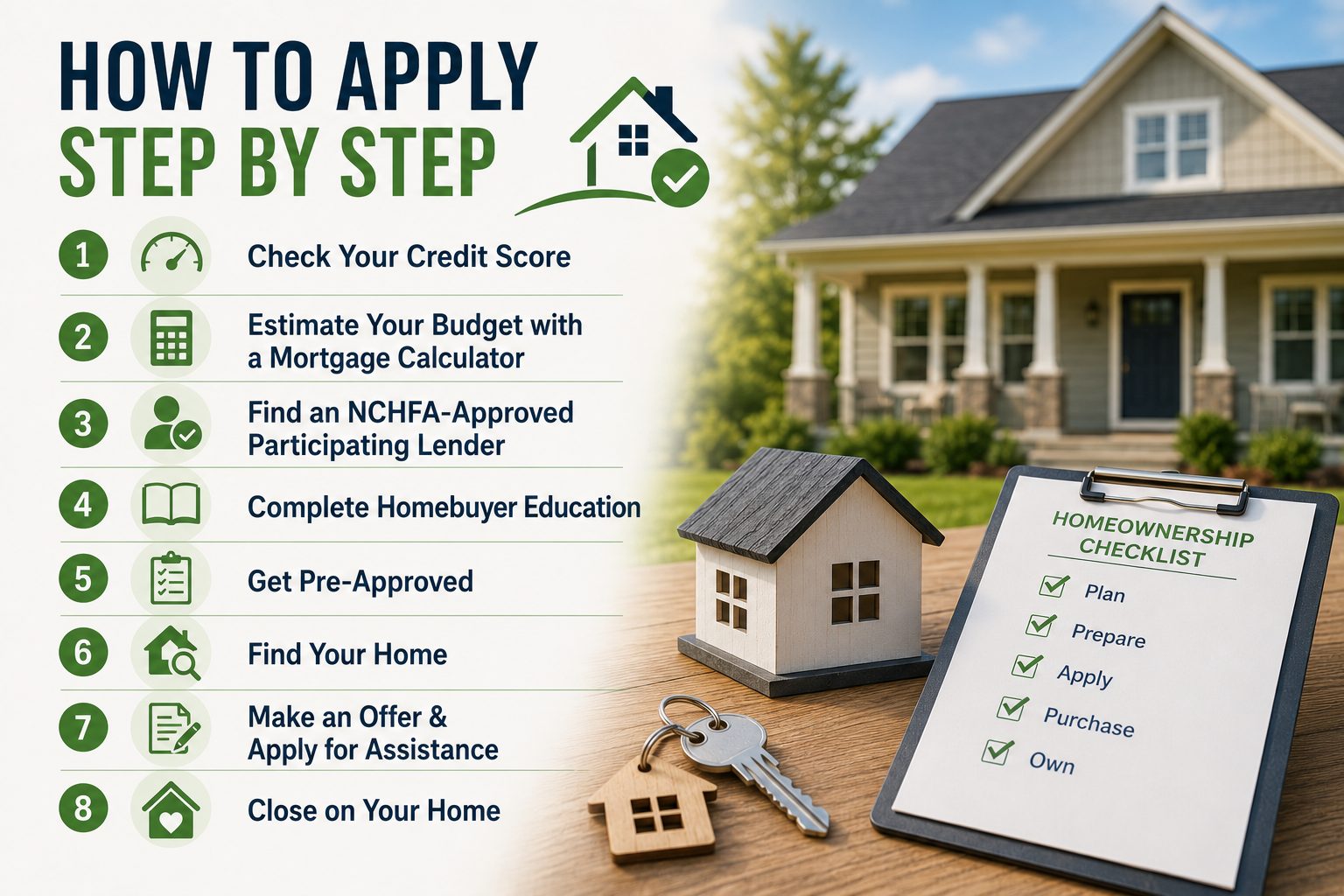
The application process for NC down payment assistance isn't complicated, but the order of steps matters. Here's exactly how to do it right:
Check Your Credit Score
Most NCHFA programs require a minimum score of 640, or 660 for manufactured homes. Pull your free credit report at AnnualCreditReport.com and address any errors or outstanding collections at least 3 to 6 months before you plan to buy.
Estimate Your Budget with a Mortgage Calculator
Before talking to a lender, use the free mortgage calculators at Ginny Real Estate to understand your realistic price range, estimated monthly payment, and what assistance programs could mean for your out of pocket costs.
Find an NCHFA Approved Participating Lender
Not every lender offers NCHFA programs. You must work with an approved participating lender to access NC Home Advantage Mortgage™ or NC 1st Home Advantage Down Payment funds. Find one at NCHomeAdvantage.com . If pursuing CPLP, you will need to contact a CPLP nonprofit member directly, since this is a separate network.
Complete Homebuyer Education
All NCHFA programs require a HUD approved homebuyer education course. The CPLP requires 6 hours of education plus 2 hours of in person counseling. Most courses are available online through programs like Fannie Mae's HomeView or CreditSmart Homebuyer U, and many buyers find them genuinely useful.
Get Pre Approved
Submit your financial documents to your lender, including 2 years of tax returns and W2s, recent pay stubs, bank statements, and photo ID. Your lender will verify your income, confirm program eligibility, and issue a pre approval letter, your green light to start making offers.
Find Your Home
Work with a local REALTOR® who understands NCHFA programs and can help you find homes that meet both your needs and the program's property eligibility requirements. Use the Ginny Real Estate live property search to browse current listings.
Make an Offer and Apply for Assistance
Once you are under contract, your lender will formally submit your NC Home Advantage Mortgage reservation through the NCHFA's Online Lender Services system. For CPLP, your CPLP member organization submits on your behalf, which is why you need to connect with them early. Allow 60 or more days for CPLP processing.
Close on Your Home
At closing, your DPA funds are applied directly, you do not receive a check. Your attorney or title company will coordinate the disbursement. Standard closing costs in NC typically run 2 to 5% of the loan amount on top of your down payment.
Understanding how NC down payment assistance is forgiven and what could require you to pay it back is critical before you commit to a program.
NC Home Advantage Mortgage™ / NC 1st Home Advantage Down Payment:
CPLP (Community Partners Loan Pool):
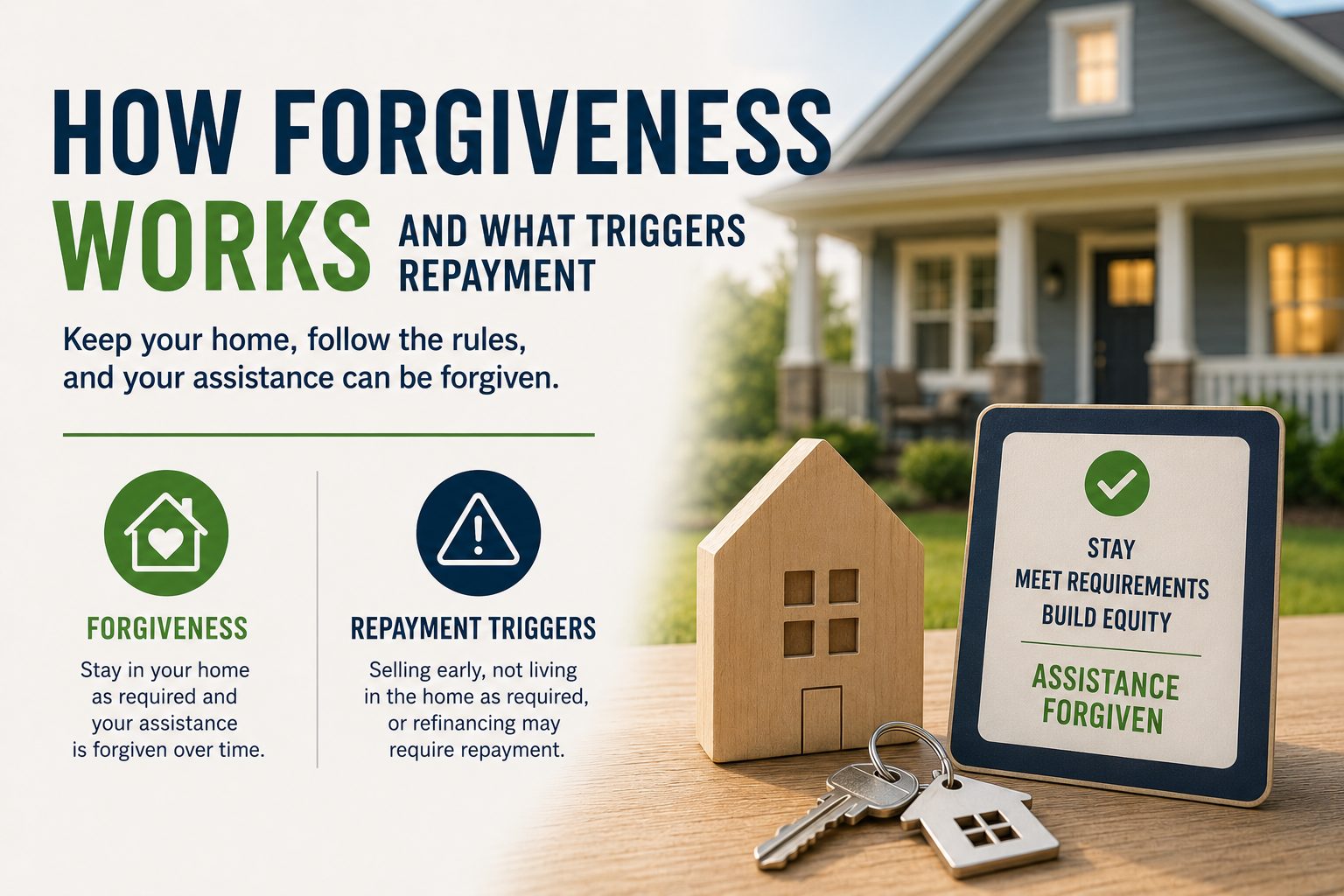
If you plan to stay in your home long term, the NC 1st Home Advantage Down Payment is essentially a gift after 15 years. For buyers with a 5 to 10 year horizon, the CPLP's deferred structure with no monthly payments may be more favorable. Talk to your lender about which structure fits your plans.
What Homes Are Eligible for These Programs?
Not every property type qualifies. Here's what NCHFA programs generally accept:
For CPLP assistance on an existing home, both a licensed NC home inspector's report and a local housing code inspection are required, and any major deficiencies must be repaired before the assistance can be approved. Plan for this timeline when making your offer.
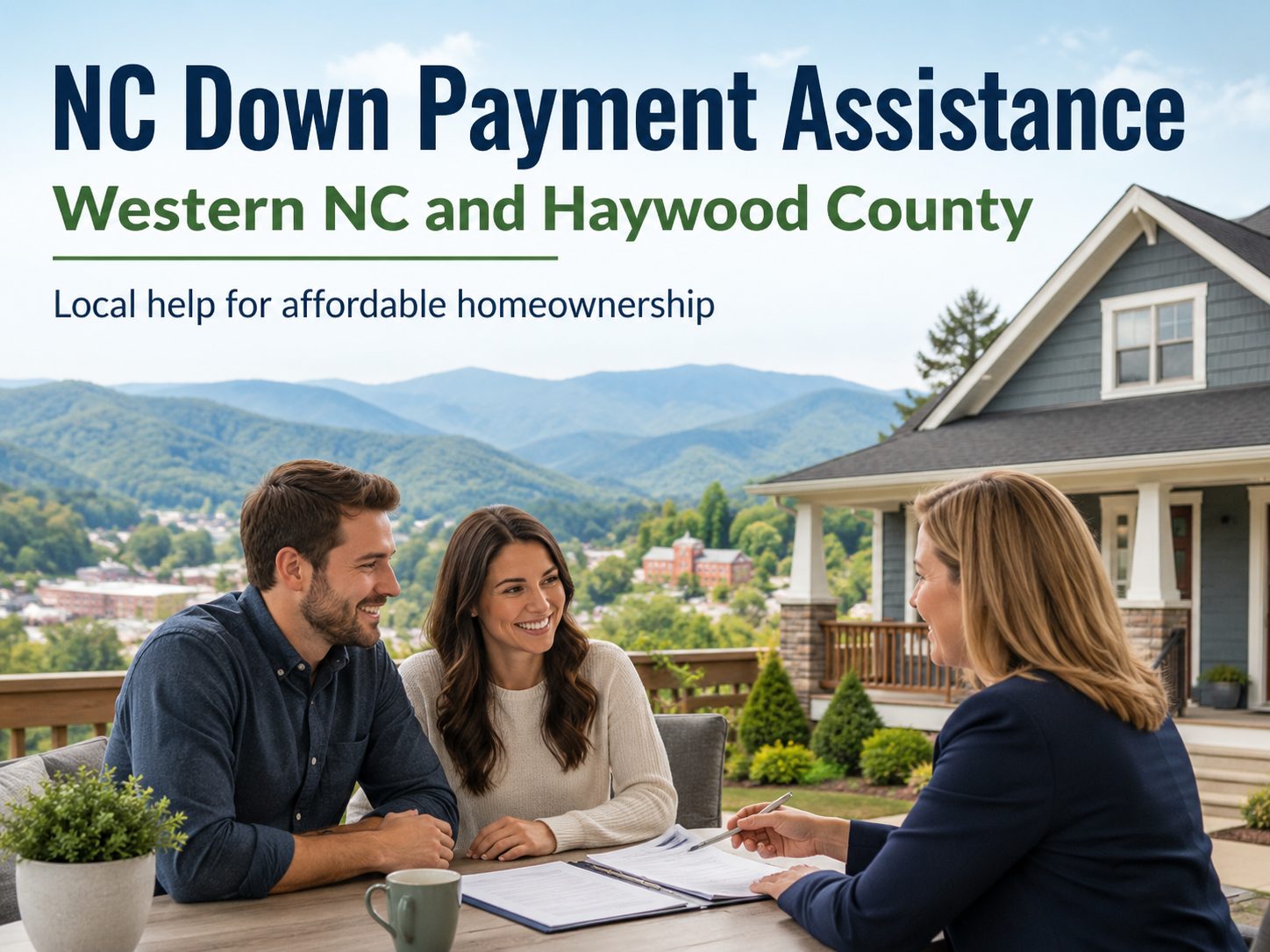
NC Down Payment Assistance + Western NC & Haywood County
If you're buying in Western North Carolina, including Clyde, Waynesville, Canton, Maggie Valley, or surrounding Haywood County communities, all NCHFA state programs apply. In addition, rural properties in parts of Western NC may also qualify for USDA Rural Development loans, which offer 0% down payment financing for eligible properties and buyers.
The combination of USDA 0% down and NC 1st Home Advantage Down Payment assistance for closing costs can make buying a home in rural Western NC remarkably affordable, even in today's market. This is one of the most underutilized strategies I walk buyers through in this region.
Read our in depth guide to First Time Homebuyer Tips in Clyde, NC for a deeper look at the local market, flood zone considerations, and what to expect buying in Haywood County specifically. More buying tips and local insights are also available on the Ginny Real Estate Buying and Selling Tips page .
Common Mistakes First-Time Buyers Make With DPA Programs
I've guided many buyers through these programs, and I've seen the same avoidable mistakes come up time and again:
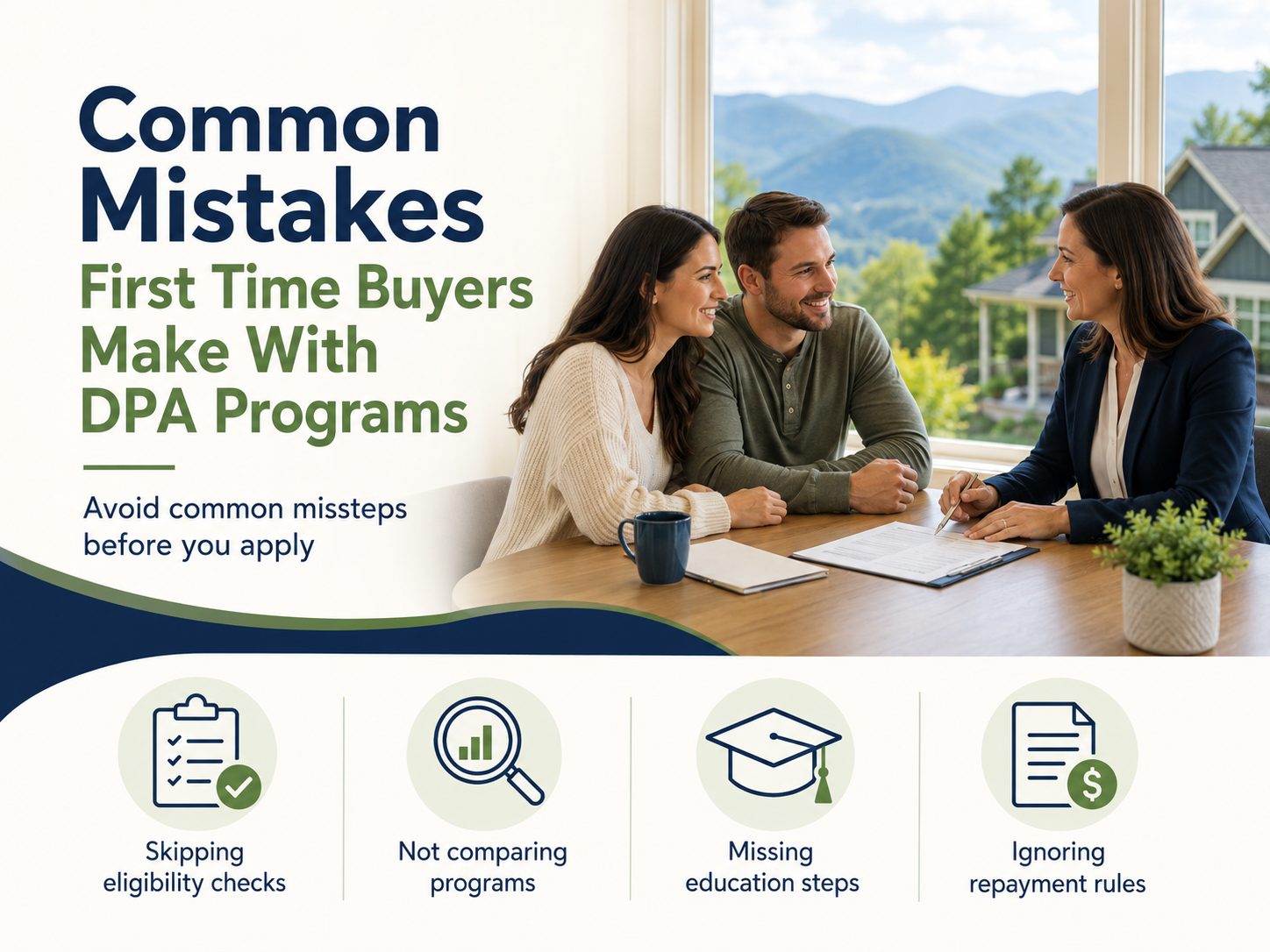
"The buyers I've seen get the most out of NC's DPA programs are the ones who came in prepared, credit checked, budget understood, lender selected, and education completed before they fell in love with a house." — Ginny
Frequently Asked Questions
How much down payment assistance is available in North Carolina?
Depending on the program and your income, NC first-time buyers can receive up to $15,000 through the NC 1st Home Advantage Down Payment, up to 3% of the loan through the NC Home Advantage Mortgage, or up to $50,000 (25% of the sales price) through the Community Partners Loan Pool for low-income buyers.
Who qualifies for NC down payment assistance in 2025?
Most NCHFA programs require you to be a first-time buyer (no home ownership in the past 3 years) or a military veteran, have a credit score of 640 or higher, earn no more than $152,000 annually (for NC Home Advantage Mortgage), purchase a primary residence in North Carolina, and work with an NCHFA-approved participating lender.
Do I have to pay back NC down payment assistance?
The NC 1st Home Advantage Down Payment ($15,000) is forgiven at 20% per year from years 11–15, completely forgiven if you stay 15 years. Repayment is only required if you sell, refinance for cash, or move before year 15. The CPLP is deferred with no monthly payments and is typically repaid when you sell or at the end of the loan term.
Can I combine multiple NC down payment assistance programs?
Yes, many NCHFA programs can be stacked. For example, you can combine the NC 1st Home Advantage Down Payment ($15,000) with the NC Home Advantage Mortgage (3% DPA). The CPLP can also be combined with the NC 1st Home Advantage Down Payment and other assistance where eligible.
What is the income limit for NC down payment assistance in 2025?
How long does it take to get NC down payment assistance?
The NC Home Advantage Mortgage process runs on the same timeline as a standard mortgage. For CPLP assistance, allow at least 60+ days. You must contact a CPLP member before signing a sales contract, complete education and counseling, and allow time for inspections and application processing.
Ready to Talk Real Estate?
Have questions about using NC down payment assistance to buy your first home? Reach out anytime. I would be happy to help you understand which programs may fit your situation, connect you with the right participating lender, and walk through the steps before you start house hunting. From credit score requirements and income limits to homebuyer education, property eligibility, and local options in Clyde, Waynesville, and Haywood County, I can help you move forward with a clearer plan and more confidence.


© 2026 MoxiWorks
© Better Homes and Gardens Real Estate 2023 – 2026. All rights reserved. Better Homes and Gardens®, BHGRE® and the Better Homes and Gardens Real Estate Logo are registered service marks owned by Meredith Operations Corporation and licensed to Better Homes and Gardens Real Estate LLC. Franchisee Legal Entity Name (not the dba) fully supports the principles of the Fair Housing Act and the Equal Opportunity Act. Each franchise is independently owned and operated. Any services or products provided by independently owned and operated franchisees are not provided by, affiliated with, or related to Better Homes and Gardens Real Estate LLC nor any of its affiliated companies.
